The Show Me / Tell Me Safety Questions
You will be asked 2 of these questions at the start of your Practical Driving Test.
UNDER THE BONNET
How to open the bonnet on a Ford Focus: Flip open the Ford Badge on the front anti-clockwise. Insert the Ignition Key and turn to ‘1’. This will unlock the bonnet. Then turn and hold at ‘2’. While holding the key at ‘2’, lift open the bonnet. The support is at front left, and fits on to the two holes on the left-inside of the bonnet.
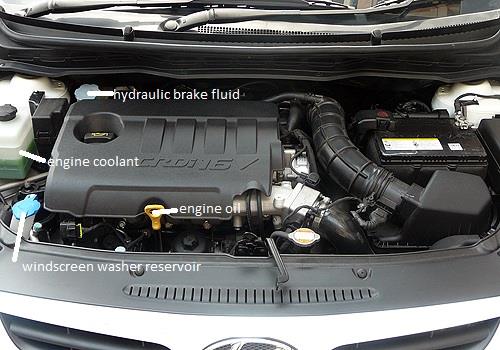
Question 1: Open the bonnet, identify where you would check the engine oil level and tell me how you would check that the engine has sufficient oil.
DSA answer information: Identify dipstick / oil level indicator, describe check of oil level against the minimum/maximum markers.
Your Answer: Show where the dipstick is. Explain that oil levels will be checked when the engine is cold and the car is on the flat and level. You can say that the oil should be checked against the minimum/maximum markers on the dipstick. You can also point to where the oil filler cap is, on the very top of the engine. It is not a requirement to remove the dipstick.
Question 2: Open the bonnet, identify where you would check the engine coolant level and tell me how you would check that the engine has the correct level.
DSA answer information: Identify high/low level markings on header tank where fitted or radiator filler cap, and describe how to top up to correct level.
Your Answer: Point to the Coolant Tank on the left side of the engine. The minimum/maximum marks can be identified on the side of the tank. Do not remove the filler cap, it will be potentially very hot. The tank can be topped up with the correct mix of water and anti-freeze liquid.
Question 3: Identify where the windscreen washer reservoir is and tell me how you would check the windscreen washer level.
DSA answer information: Identify reservoir and explain how to check level.
Your Answer: Point to the windscreen washer bottle. It is on the far left of the engine compartment with a blue cap. The level cannot be checked visually. Explain that when the level is low, a warning will appear on the dashboard. Alternatively, when the washer is used, the spray becomes soapier when levels get low. Refill with a mix of water and special Windscreen Wash Mix.
Question 4: Open the bonnet, identify where the brake fluid reservoir is and tell me how you would check that you have a safe level of hydraulic brake fluid.
DSA answer information: Identify reservoir, check level against high/low markings.
Your Answer: Point to the brake fluid reservoir, tucked under the rear-left of the engine compartment. The Minimum/Maximum levels can be seen on the right side of the Reservoir Bottle. If there is a problem have it looked at by a professional. Brake Fluid is very hygroscopic (it attracts water, which you don’t want in your system.
BRAKES
Question 5: Tell me how you would check that the brakes are working before starting a journey.
DSA answer information: Brakes should be tested as you set off. Brakes should not feel spongy or slack. Vehicle should not pull to one side.
Your Answer: You can explain a static brake test - the resistance felt when the brake pedal is pressed (when the car is stationary and engine off). Also explain that the pedal will yield slightly when the engine is started (showing that the power braking system is operative). Explain the 'rolling brake test'. Brakes should be tested at a low speed by pressing the footbrake pedal gently as soon as the car is moving. The brakes should slow the car without pulling to one side. The brake pedal should not feel spongy or slack.
Question 6: Show me how you would check that the brake lights are working on this car. (I can assist you, if you need to switch the ignition on, please don't start the engine.)
DSA answer information: Operate brake pedal, make use of reflections in windows, garage doors, etc, or ask someone to help.
Your Answer: Switch on the ignition (not the engine) and operate the brake pedal. Explain how you can make use of reflections in windows, garage doors, etc, in order to make a visual check of the lights. Also mention that you could ask someone to help by pressing the pedal or checking the lights. (You can ask the examiner to check that the lights are working.)
Question 7: Tell me how you would know if there was a problem with your anti lock braking system.
DSA answer information: Warning light should illuminate if there is a fault with the anti lock braking system
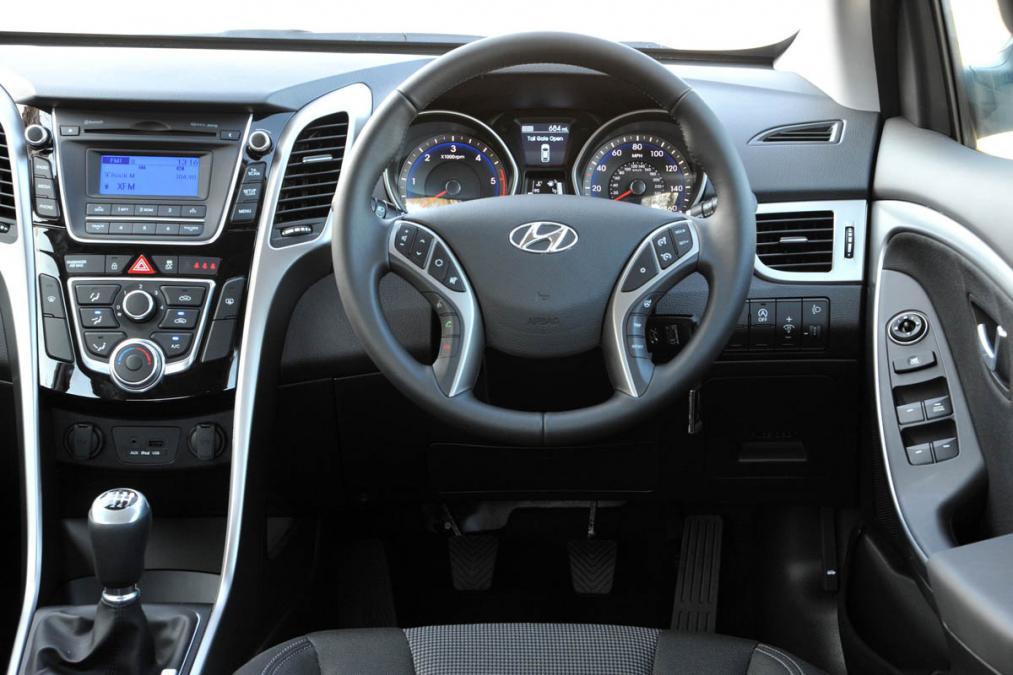
Your Answer: Point out the warning light on the instrument panel and explain that it will illuminate permanently in the event of the anti-lock system failing. It is the yellow light reading ABS on the right dashboard dial.
Question 8: Show me how you would check the parking brake (handbrake) for excessive wear, make sure you keep safe control of the vehicle
DSA answer information: Apply footbrake firmly. Demonstrate by applying parking brake (handbrake) so that when it is fully applied it secures itself, and is not at the end of the working travel.
Your Answer: You can demonstrate by pressing the footbrake to secure the car, then applying the parking brake (handbrake) so that when it is fully applied the ratchet holds and the car remains secure. It is also necessary to explain that the brake should not be at the end of its working travel. (That is, it secures the car without having to be pulled all the way up) You can also mention the red brake warning light on the instrument panel.
TYRES
Question 9: Tell me where you would find the information for the recommended tyre pressures for this car and how tyre pressures should be checked.
DSA answer information: Manufacturer’s guide, use a reliable pressure gauge, check and adjust pressures when tyres are cold, remember the spare tyre, remember to refit valve caps.
Sample Answer: “I would refer to the pressure tables in the handbook or on the driver door pillar. I will check pressures when the tyres are cold using a reliable pressure gauge. The valve caps will be removed to attach the air pump for inflation and replaced after. I would also remember to check the spare wheel.”
Question 10: Tell me how you would check the tyres to ensure that they have sufficient tread depth and that their general condition is safe to use on the road.
DSA answer information: No cuts and bulges, 1.6mm of tread depth across the central ¾ of the breadth of the tyre and around the entire outer circumference.
Sample Answer: "I would use a tread depth gauge (or the Tread Wear Indicators on the tyres) to check the tread depth in a couple of places across the tyre and make a visible check to ensure the tread is consistent over three-quarters of the width. I would make a visual check to make sure that there are no cuts, blisters or bulges on the tyres. To check side of the tyre that I can't see I would gently run my hand around being especially careful because of the dangers of being injured by glass or other debris that might be embedded in the tyre - I'd do this on all tyres, including the spare. If I was unsure about any aspect of my tyre safety I would consult a tyre specialist ".
STEERING
Question 11: Show me / explain how you would check that the power assisted steering is working before starting a journey.
DSA answer information: If the steering becomes heavy the system may not be working properly. Before starting a journey two simple checks can be made. Gentle pressure on the steering wheel, maintained while the engine is started, should result in a slight but noticeable movement as the system begins to operate. Alternatively turning the steering wheel just after moving off will give an immediate indication that the power assistance is functioning.
Sample Answer: “As I turn the engine on, the steering should loosen off. Should the steering remain heavy, this would indicate a fault in the system.”
LIGHTS
Question 12:
Tell me how you would check that the headlights & tail lights are working.
DSA answer information: Operate switch (turn on ignition if necessary), then walk round vehicle. (As this is a "Tell Me" question, there is no need to physically exit the vehicle and make the checks).
Your Answer: Turn the ignition on 1 click (not the engine). The light switch is on the right of the dashboard. Turn it 1 click for side lights and 2 clicks for headlights. To know the lights are working you would walk round the vehicle.
Question 13: Show me how you would check that the direction indicators are working.
DSA answer information: Applying the indicators or hazard warning switch and check functioning of all indicators.
Your Answer: There are 2 options. With the ignition on (1 click) switch on each indicator and get out the vehicle to check. Alternatively switch on the hazard warning lights. The switch is the red button on the dashboard above the radio. It would also be worth mentioning that if the indicator ticks faster, that would mean that a bulb has blown.
Question 14: Show me how you switch your headlight from dipped to main beam and explain how you would know the main beam is on whilst inside the car.
DSA answer information: Operate switch (with ignition or engine on if necessary), check with main beam warning light.
Sample Answer: "I need to start the engine for this. With the headlights switched on, I switch to main beam like this (operates switch) - the blue light on the dials (points to the light) shows that full beam is on." To go from dipped to main beam you will pull the indicator stalk towards you, then repeat to switch off.
Question 15: Show me how you would switch on the rear fog light(s) and explain when you would use it/them. (No need to exit the vehicle for the 'tell' element)
DSA answer information: Operate switch (turn on dipped headlights and ignition if necessary). Check warning light is on. Explain use.
Sample Answer: "To switch the fog lights on I have to turn on the ignition and lights like this (demonstrates). Then switch on the fog lights like this (demonstrates). This warning light shows that the fog lights are on (points to light) - I could check that they are working by getting out of the car and looking." The fog lights are switched on by pulling the light switch out one click for front fog lights and 2 clicks for rear fog lights. The fog lights should be used in poor visibility below 100m, not just in fog!!
SAFETY
Question 16:
Show me how you would check that the horn is working (this should be done off road only).
DSA answer information: This check is carried out by using control (turning on ignition if necessary).
Sample Answer: The examiner should only ask this question if the car is in a DSA car park - not if it is on the road. The pupil would need to ensure that it was a safe and legal position if the horn were to be demonstrated. The horn is in the middle of the steering wheel. Mention that the horn would be checked off-road only and not between the hours of 1130pm and 7am overnight.
Question 17: Tell me how you make sure your head restraint is correctly adjusted so it provides the best protection in the event of a crash.
DSA answer information: The head restraint should be adjusted so the rigid part of the head restraint is at least as high as the eye or top of the ears, and as close to the back of the head as is comfortable.
Sample Answer: Demonstrate how to adjust the head restraint, explaining the adjustment as it is made. There is a button on the seat beside the restraint pillar. Ensure you can get a clenched fist between your head and the restraint. It is not a head rest!!
WINDOWS
Question 18:
Show me how you would clean the windscreen using the windscreen washer and wipers
DSA answer information: Operate control to wash and wipe windscreen (turn ignition on if necessary).
Sample Answer: If demonstrating you should be aware that the screen wash button/switch should be used initially - the wiper switch should not be switched on. This is to minimise scratching of the screen and excessive wear to the wiper blades. The wipers operate from the wiper stalk on the right of the steering wheel. Pressing the end button will scoosh the windows and create 3 wipes plus one other. Wiper speeds can also be controlled here.
Question 19: Show me how you would set the demister controls to clear all the windows effectively, this should include both front and rear screens
DSA answer information: Set all relevant controls including; fan, temperature, air direction / source and heated screen to clear windscreen and windows.
Sample Answer: Demonstrate how to set the relevant controls - these include screen demisters and fans. You will also need to show how the vents can be directed towards the side window. There are two buttons in front of the gear stick. These are for the front and rear screen heaters. Please note that not many cars have heated front screens. Usually they’re on Fords.
|